
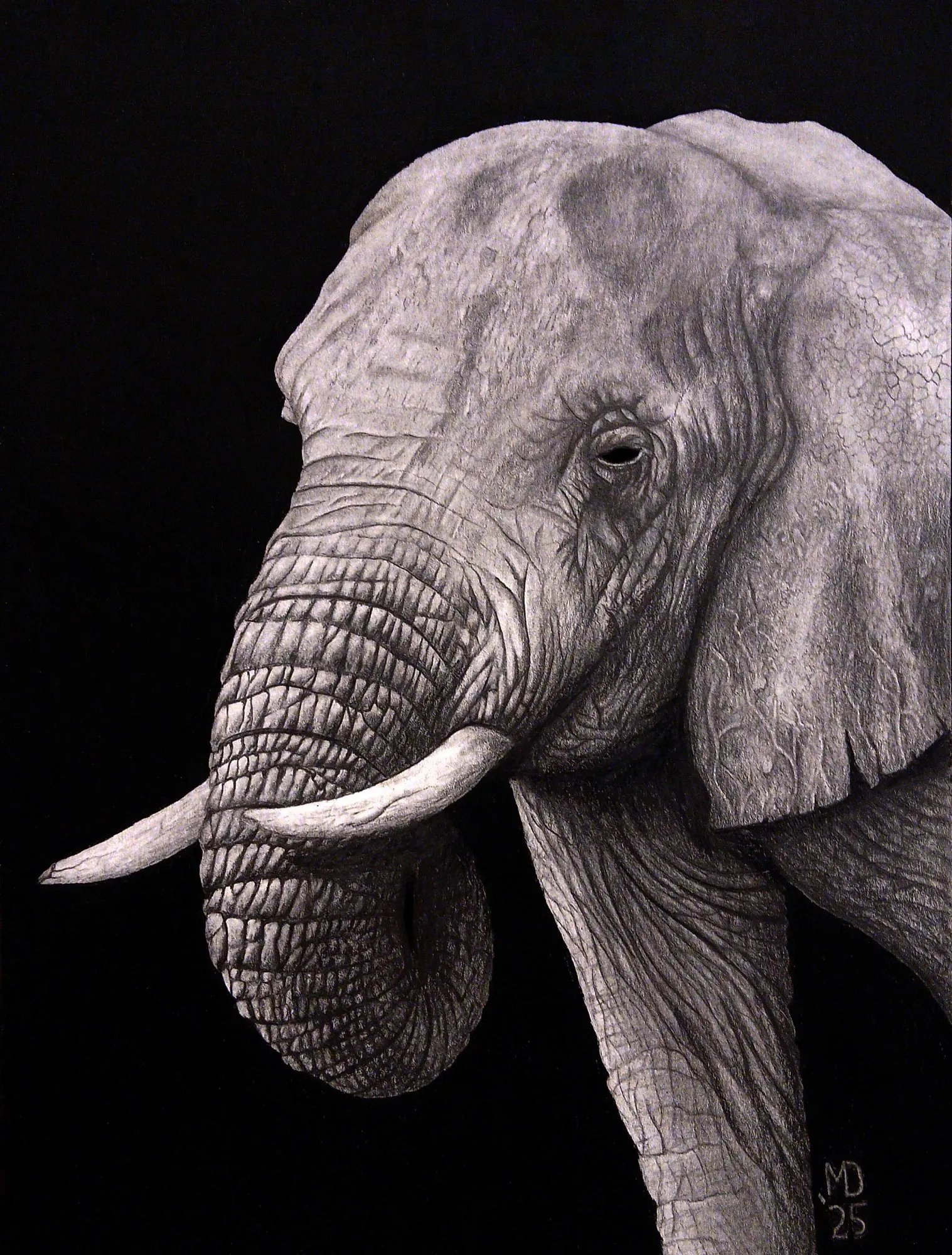
About the African Elephant Drawing
Elephants have fascinated me for as long as I can remember. As a child, however, I knew them primarily through zoos and circuses – settings that presented them as impressive and unusual animals but could not convey the full nature of their lives. Seeing African Elephants living freely in Kenya transformed my understanding of them. Their immense size was striking, but so were their quiet movements, social awareness, and unmistakable presence within the landscape.
Another source of inspiration for this drawing came from newsletters that my friend Bill Burnett shared with me about The Elephant Sanctuary in Tennessee. Reading about the sanctuary’s work and the individual histories of elephants receiving lifetime care there reinforced my appreciation for elephants as complex individuals shaped by long lives and accumulated experiences.
African Elephants (Loxodonta africana) are the largest living land animals. They occupy a variety of habitats across sub-Saharan Africa, including savannas, woodlands, forests, and wetlands.
The familiar idea that elephants possess long memories has a strong basis in their biology. Their survival may depend on remembering seasonal resources, migration routes, other elephants, and previous experiences accumulated over many years. Older individuals can carry knowledge that benefits an entire family group. The title Long Memories refers to that remarkable capacity, but it also reflects my own lasting memories of seeing elephants living freely in Africa.
African Elephants continue to face serious pressures from habitat loss, fragmentation, illegal killing for ivory, and increasing conflict with people. I learned a great deal about human-elephant conflict while staying near Amboseli National Park in Kenya, where elephants sometimes entered farmers’ fields and gardens in search of food. For families who depend on those crops, a single visit by elephants can destroy months of work and threaten their livelihood, yet they have few safe or effective ways to protect themselves. Some people have even been killed while attempting to drive elephants away. These conflicts reveal how difficult elephant conservation can be when the needs of wildlife and local communities overlap, and why lasting solutions must protect elephants while also helping people safeguard their crops, homes, and lives.
In Long Memories, I placed the elephant against a nearly black background so that the eye, worn tusks, deeply folded trunk, and weathered skin emerge from the darkness. The close composition brings the viewer directly into the elephant’s presence and emphasizes the textures created over a long life. I wanted the portrait to convey not only physical power, but also age, dignity, individuality, and the weight of accumulated experience.
Long Memories is a graphite-pencil wildlife drawing of an African Elephant (Loxodonta africana) by Michael E. Dorcas for Tantilla Art.