
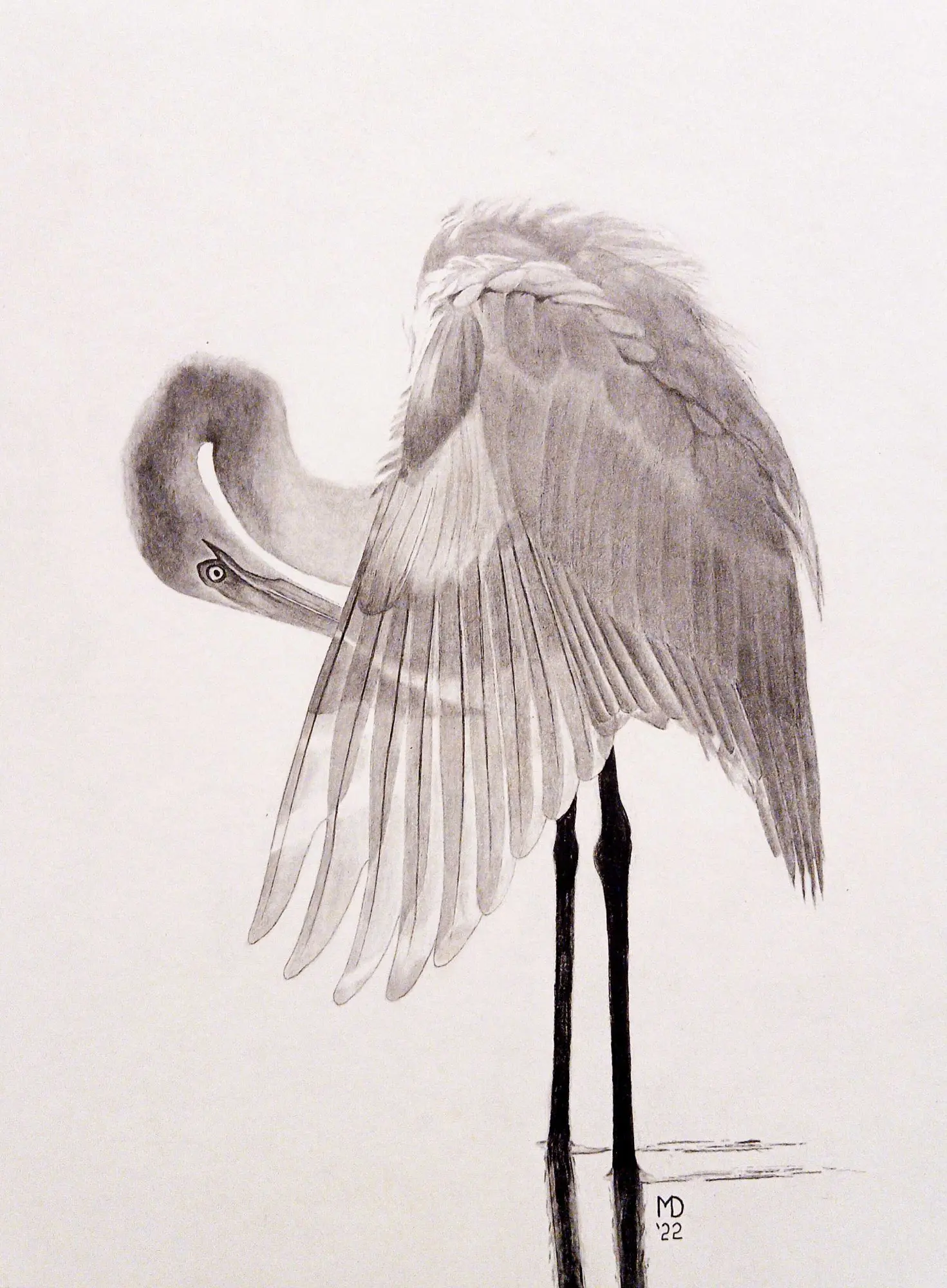
About the Great Egret Drawing
I have seen Great Egrets throughout my life in ponds, marshes, lakes, rivers, estuaries, and other aquatic habitats. They are familiar birds that somehow never seem ordinary. Their brilliant white plumage, long black legs, slender necks, and deliberate movements give them an unmistakable elegance.
Great Egrets (Ardea alba) often hunt by standing motionless or wading slowly through shallow water while watching for fish, frogs, and other small prey. When an opportunity appears, their patient stillness gives way to a remarkably fast strike with the long, pointed bill.
The species also has an important place in the history of bird conservation. Great Egrets were once killed in enormous numbers for the long ornamental plumes that develop during the breeding season and were prized for decorating women’s hats. Public opposition to the plume trade helped inspire some of the earliest organized bird-protection efforts in North America, and the Great Egret later became the symbol of the National Audubon Society.
In Grace, I portrayed the egret bending its long neck beneath an extended wing as it preens. The layered flight feathers, soft body plumage, curved neck, and delicate balance of the pose reveal a quieter and more intimate side of a bird usually seen standing upright and alert beside the water. The title reflects the effortless elegance of both the posture and the species itself.
Grace is a graphite wildlife drawing of a Great Egret (Ardea alba) by Michael E. Dorcas for Tantilla Art.