
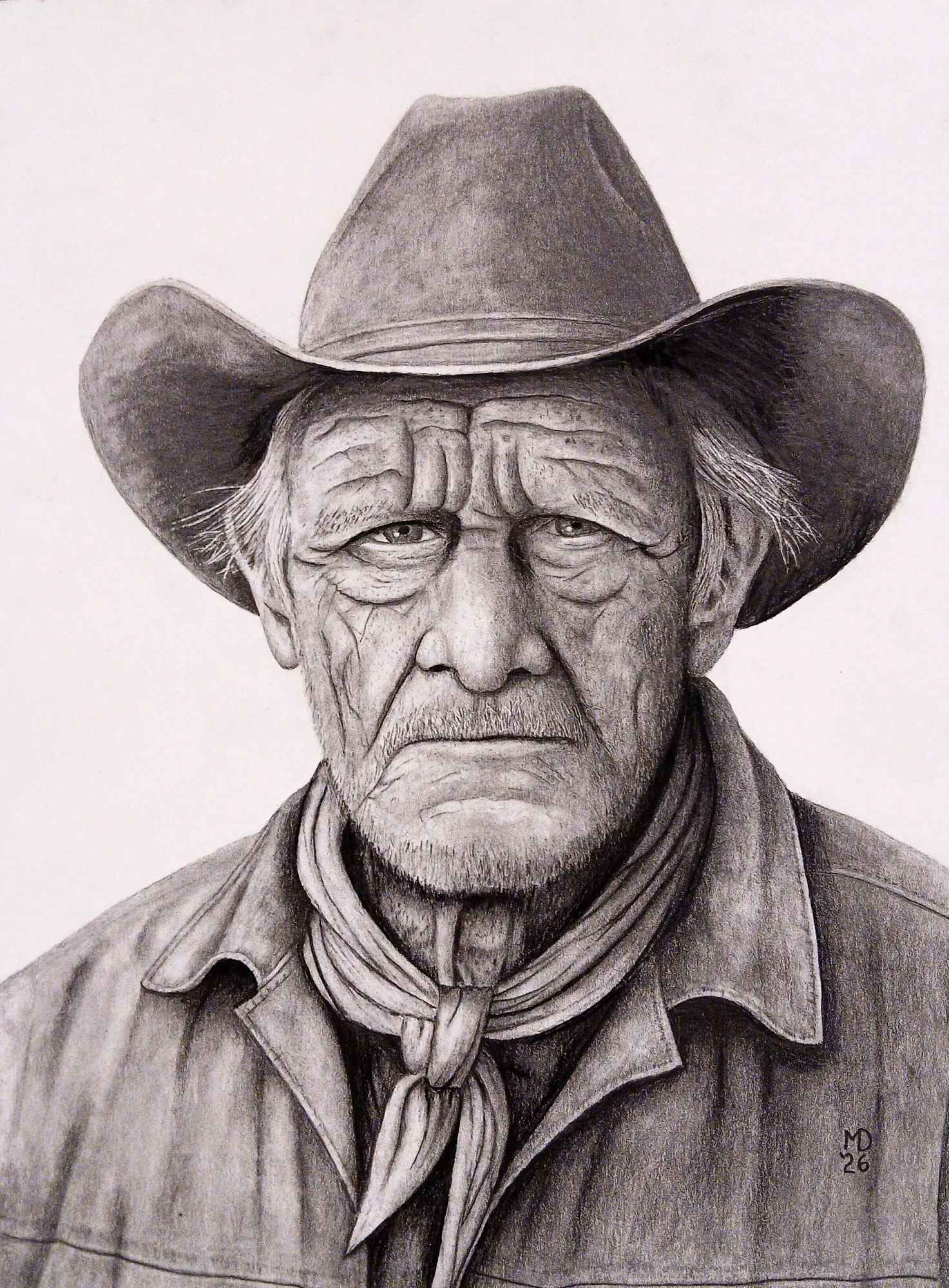
About the Cowboy Portrait
High Plains Rider is rooted in my Texas heritage and in the enduring presence of the cowboy within the history and identity of the state. Cowboys are often represented through dramatic scenes of horses, cattle drives, conflict, and open landscapes, but I wanted this portrait to focus instead on the individual behind that familiar image.
I was drawn immediately to the directness of the subject’s gaze. His expression is neither theatrical nor romanticized. It suggests a person accustomed to long days, difficult conditions, physical labor, and the repetitive responsibilities required to care for animals and work the land.
The deeply lined face became the emotional center of the drawing. Each crease and shadow seems to record accumulated years of sun, wind, dust, fatigue, and experience. The broad-brimmed hat, neckerchief, worn coat, and unshaven face help establish the setting and occupation, but it is the expression that gives the portrait its sense of character.
The history of the American cowboy developed from a mixture of traditions, including the horsemanship and cattle-working practices of Spanish and Mexican vaqueros. Their skills, equipment, language, and methods strongly influenced ranching culture throughout Texas and the American West. Later generations of cowboys included people from many racial and cultural backgrounds, even though popular images have often presented a much narrower version of that history.
Although mechanization and changing land use have transformed ranching, working cowboys remain part of contemporary life across Texas and the West. Their tools and methods may change, but the work continues to depend on judgment, endurance, familiarity with animals, and an intimate knowledge of the landscape.
In High Plains Rider, I used detailed graphite shading to emphasize the textures of weathered skin, facial hair, fabric, leather, and the sweeping curves of the cowboy hat. The plain background removes distractions and places the viewer directly before the subject, allowing his face and gaze to carry the composition.
My intention was not to create an idealized Western hero, but to honor the quiet dignity of a working person whose life has been shaped by land, hardship, responsibility, and routine. The portrait reflects an enduring, largely unspoken resilience that I associate with the ranching traditions of Texas.
High Plains Rider is a graphite portrait of a working cowboy by Michael E. Dorcas for Tantilla Art.