
The first Nile Crocodiles I saw outside a zoo were in Kenya in 2003. We were staying in the Masai Mara and visited the Mara River at one of the famous crossings where zebra and wildebeest plunge into the water during their migration. It is a place familiar from wildlife documentaries: steep banks, struggling animals, and crocodiles that suddenly become much more than a row of bumps on the water’s surface.
Unfortunately, we were there outside the migration season. There were no herds crossing and no dramatic struggles in the current. There were, however, plenty of crocodiles, both in the water and lying along the banks. And they were huge. By my estimate, many were at least five meters long (~16 ft) and probably weighed well over a thousand pounds. Seeing animals that size without a zoo barrier makes quite the impression.
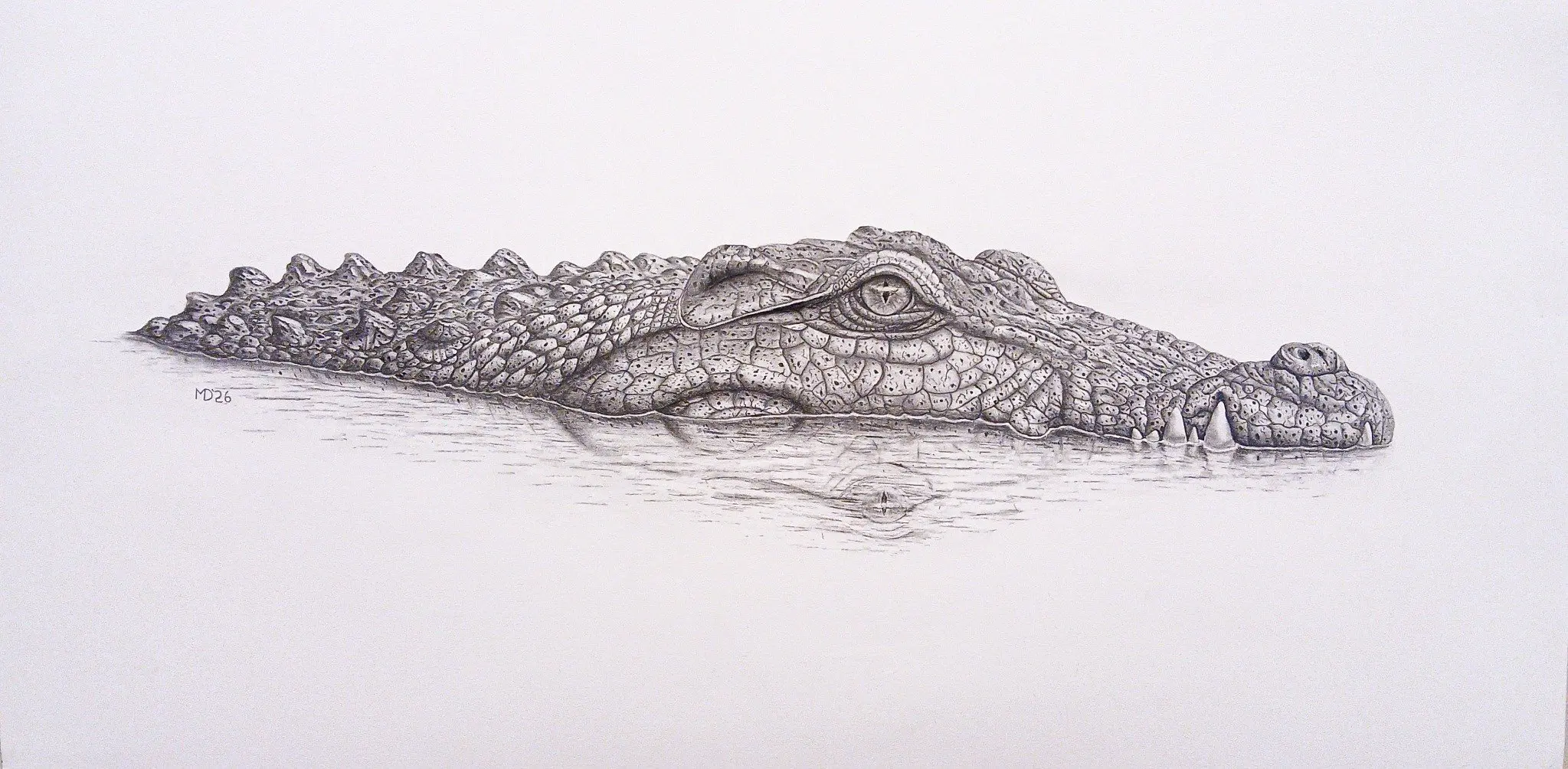
I encountered Nile Crocodiles on subsequent trips to East and southern Africa, but those first animals along the Mara River stayed with me. The title of this drawing recalls that introduction.
Like most crocodilians, a large Nile Crocodile can conceal an extraordinary amount of animal beneath very little visible evidence. Its eyes, ears, and nostrils are positioned high on the head, allowing it to watch, listen, and breathe while most of its body remains submerged. In Mara, the eye and the ridges of armored skin give some indication of what lies below the waterline. The rest is left to the viewer’s imagination.
The migration crossings show Nile Crocodiles at their most spectacular, but their lives involve much more than catching large mammals. Fish are an important part of their diet, and younger crocodiles feed on insects, crustaceans, and other small animals. As they grow, the range of prey they can handle expands considerably. A crocodile resting along a riverbank may look almost immovable, but that appearance gives little indication of how quickly it can strike from the water.
Their danger to people is equally real. In December 2010, experienced South African expedition kayaker Hendri Coetzee was killed by a crocodile on the Lukuga River in the Democratic Republic of the Congo while traveling with two other paddlers. In 2018, Zanele Ndlovu survived a crocodile attack while canoeing on the Zambezi River in Zimbabwe, but lost her right arm. Five days later, she and her fiancé were married in the chapel of the hospital where she was recovering. These accounts are sobering reminders of the consequences an encounter can have, even for people traveling in boats.
There is also a side of crocodile behavior that rarely receives the same attention. Female Nile Crocodiles guard their buried eggs, respond to calls from hatchlings, uncover the nest, and carry their young to water in their mouths. The control required to transport a tiny hatchling in those enormous jaws is remarkable.
Conserving these animals requires taking their danger seriously. People living beside crocodile habitat may depend on the same water for fishing, washing, and other daily needs. Nile Crocodiles remain widespread and are classified as Least Concern globally, but that status does not mean every population is secure. Historical hunting for skins, changes to shoreline habitat, and conflict with people have all affected their survival. Protecting crocodiles has to include practical concern for the people who share their rivers.
In this drawing, I concentrated on the intricate scales, the heavy ridges behind the head, and the watchful eye. The reflection was particularly important. I wanted the reflected eye to draw a second look, while allowing the surrounding image to break apart in the ripples. Keeping it softer than the crocodile itself helped preserve the appearance of water.
Mara brings me back to that first visit to the river: enormous crocodiles lying on the river banks, others barely visible at the surface, and the realization that seeing so little of an animal could still command so much attention.